Experimentation
Materials & Processes | CREA7001
10/10/2026
Software Decisions
Most of my experience with motion graphics has been through 3D animation (using Blender). Whilst there is still plenty more to learn through using Blender, I want to experiment with 2D animation as well. Most graphics in the industry are created using 2D software, not 3D, something which I have to be mindful of if I were to only experiment using 3D.
Prime candidates for 2D are After Effects and Cavalry. My pre-existing knowledge leads me to believe that Cavalry would suit my needs better. A major factor is the cost element… Cavalry has recently changed from paid software to free software, whereas After Effects is subscription-only. When I eventually enter the industry (hopefully as a freelancer) I want the assurance that I can still create things without needing to shovel out costly fees, especially at the beginning where this may be unfeasible.
Putting this thought aside, I will still experiment with the following:
Cavalry (2D)
After Effects (2D)
Blender (3D)
If time permits, I’d also like to try stop motion. Would need to think of an experiment suitable for this.
10/10/2026
Where to begin…
Having only really dabbled with animation, I wasn’t really sure where to start with experimenting. I decided that initially it would be a good idea to dissect some existing animations, figuring out how they work and flow, and then recreating them (with a unique twist, something that harkens back to my own style.
On my research tab of this journal, I discovered a website called Scenery, which is a community for the 2D animation software Cavalry. It provides clear examples of effects that can be achieved, along with providing the working file so I can deep dive into the inner workings of the graphics.
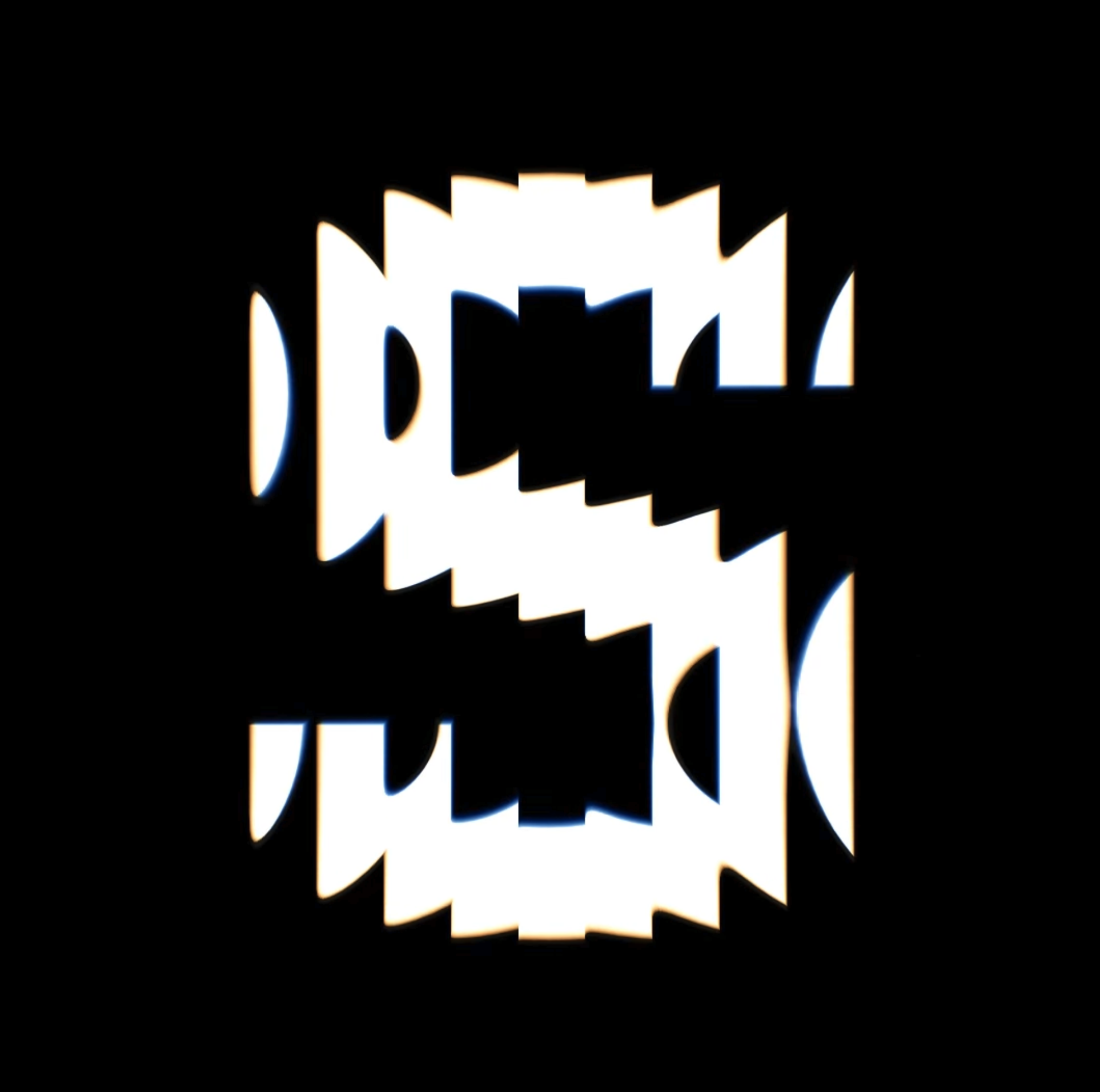
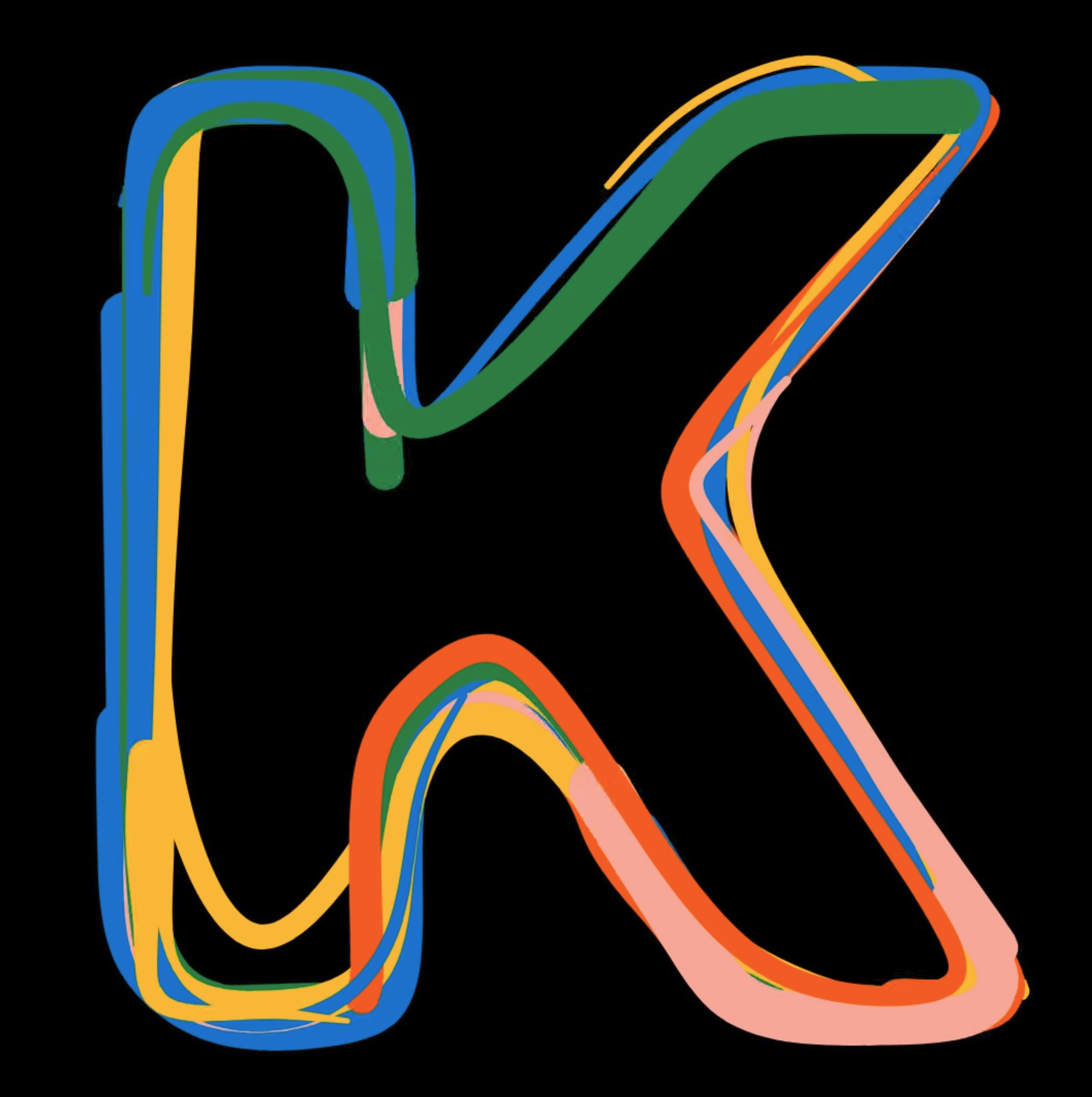
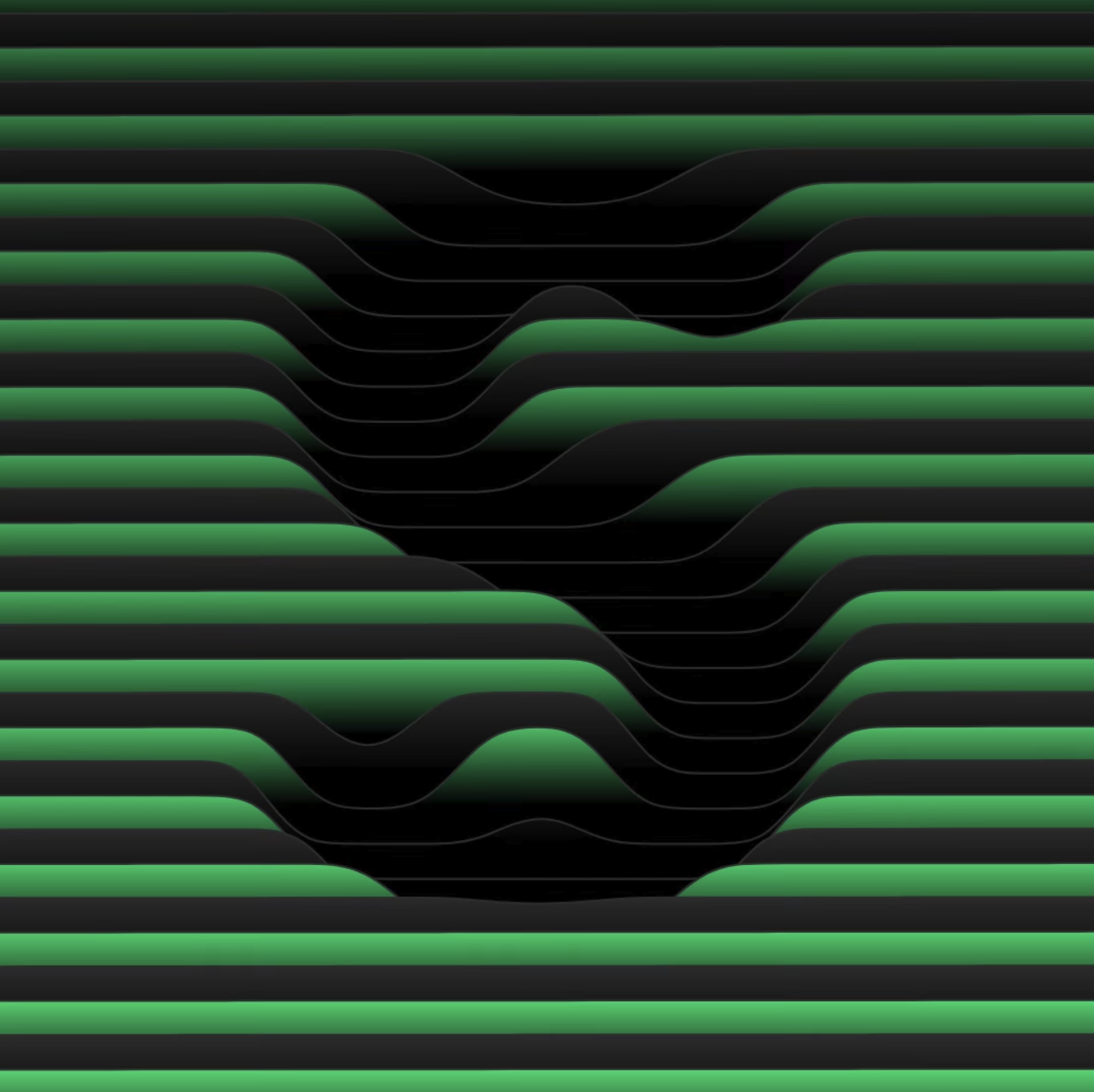
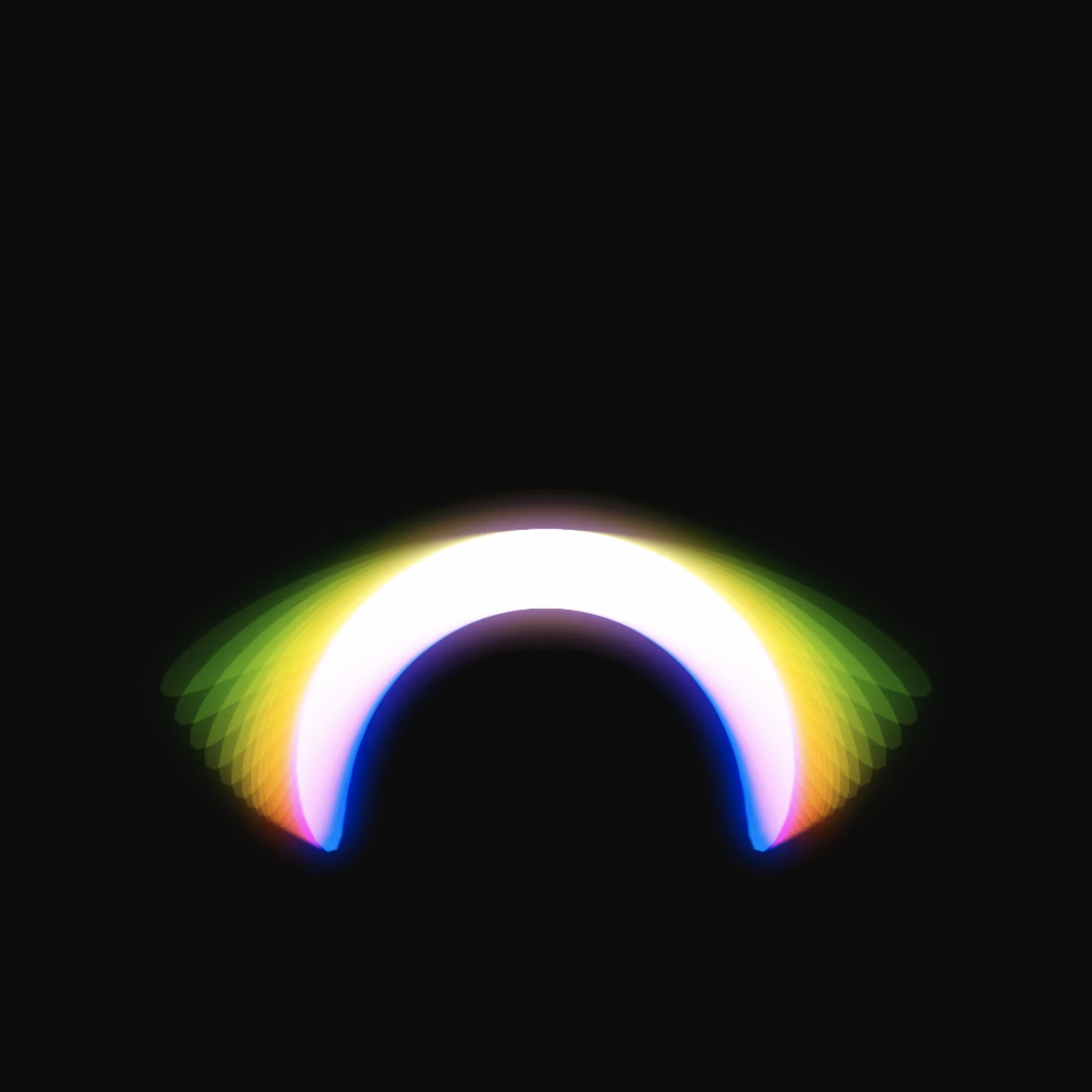
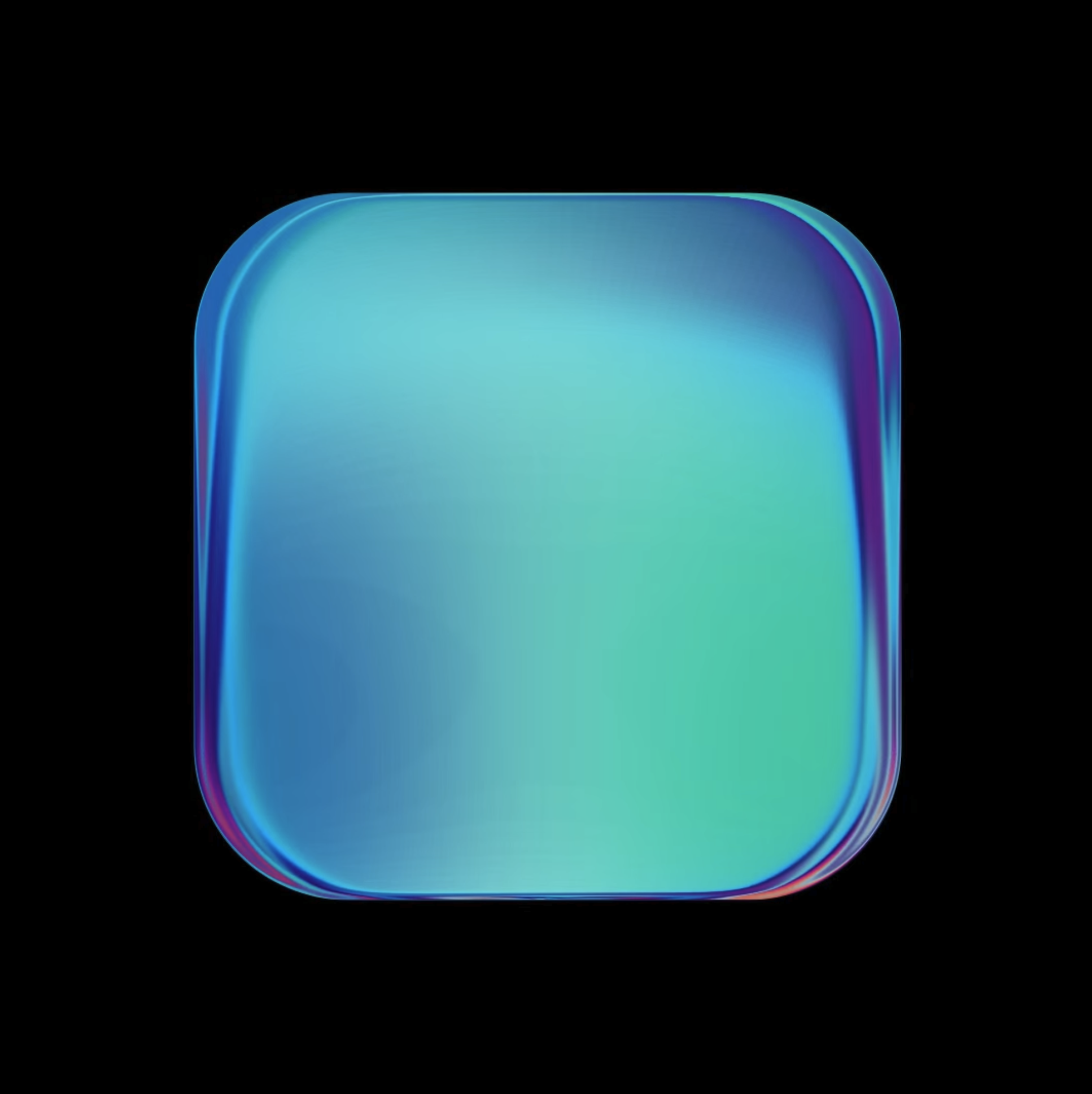
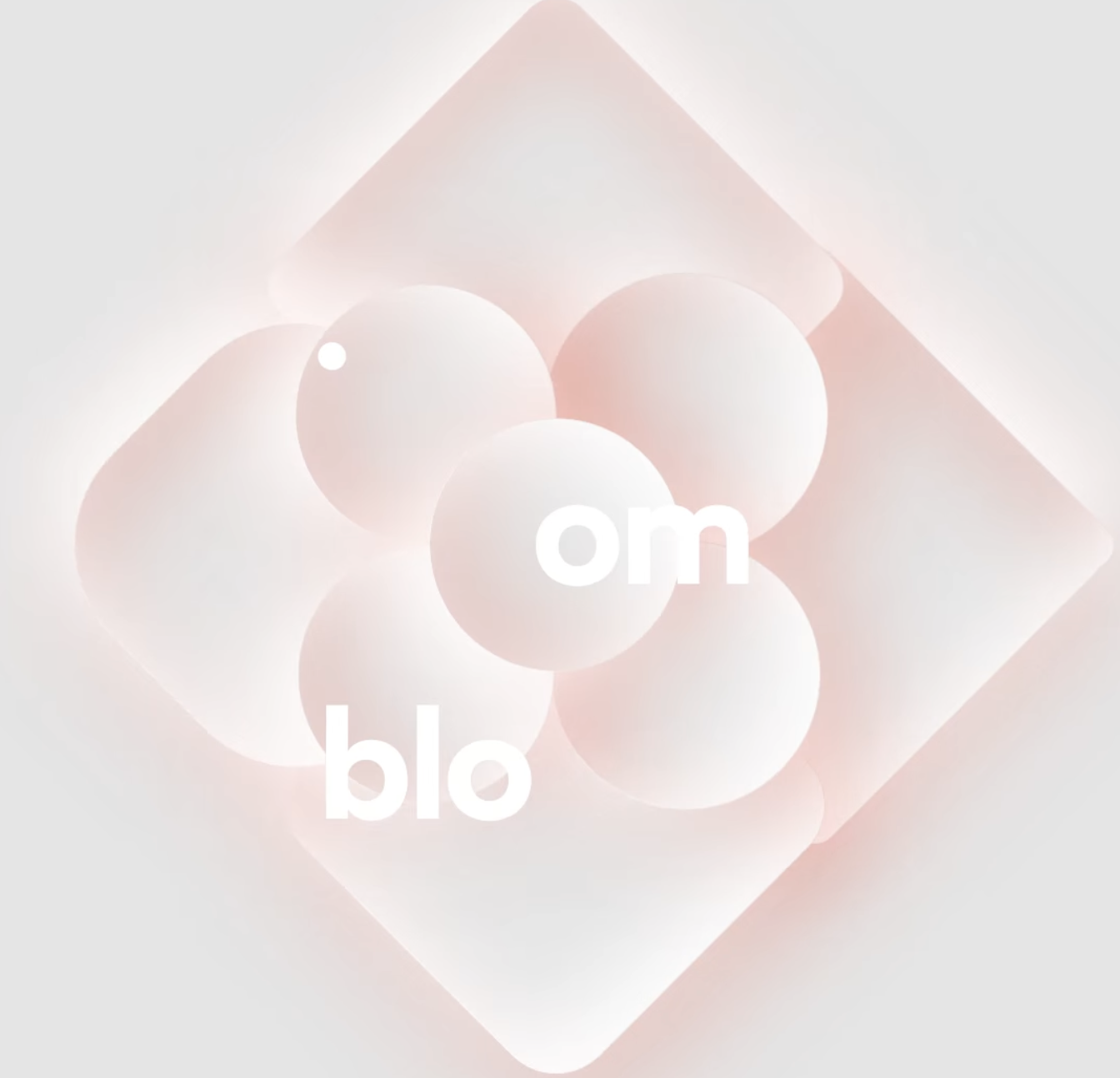
Some static examples of motion graphics


12/10/2026
First experiment: A failure…
My first experiment was a bit of a fail. I wanted to recreate the motion waves style graphic, however it seems to have gone wrong somewhere in the process. I found a file to deep dive into on scenery to try and reverse engineer the inner workings, but somewhere I clearly missed a step.
Example motion graphic:
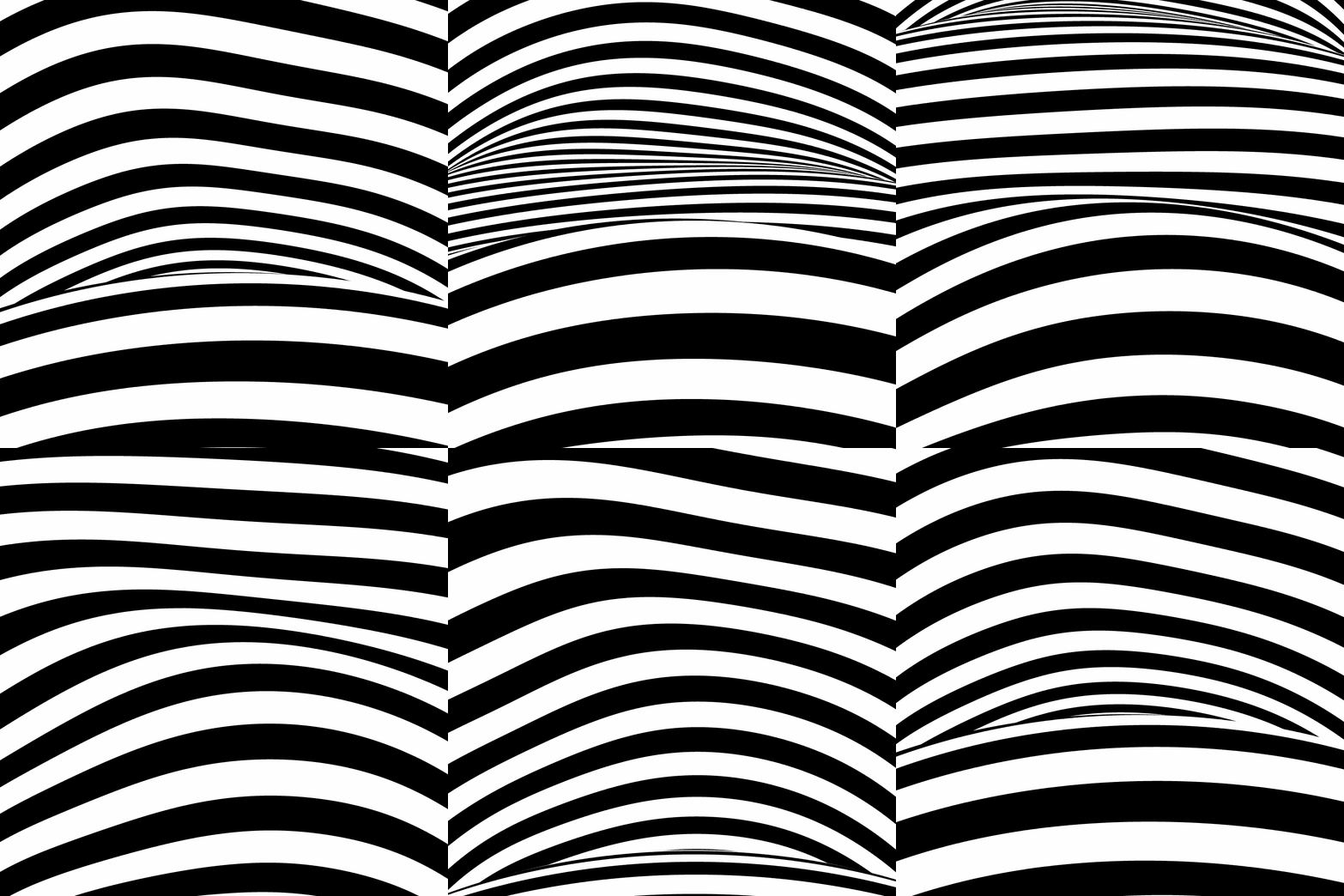
Example file from:
https://scenery.io/scenes/black-white-waves-kKJmVGT8if0/
©Niels Hofsteenge
Experiment Process
Feel like it was going well up until this point, but then I’m not really sure what happened after this. I could see it forming in the above screenshots, but then all of a sudden it went pear-shaped.
Did somehow manage to recover it from being a flashing failure, however it’s still missing the look of the reference graphic. Cavalry is primarily dynamic/node-based, which I understand slightly from using Blender, but it’s hard to follow in a 2D environment.
Experiment Outcome
I feel I picked the wrong type of effect to try and replicate as a first experiment. The next experiment needs to be something that doesn’t rely so heavily on parent and child nodes and oscillations. Need to get my head around everything connecting together first.
12/10/2026
Second Experiment: Better, but still wrong…
For the second experiment, I decided to have a go reverse-engineering the pixelated type motion look. This went a lot better than the first experiment, however with this one I found it strangely hard to line up the timings. The size of the pixels is also wrong, and the text doesn’t fall off properly after the pixel effect.
Example motion graphic:

Example file from:
https://scenery.io/scenes/matcampostrini-yQFicqYeZD7/
©Matteo Campostrini
Experiment Process
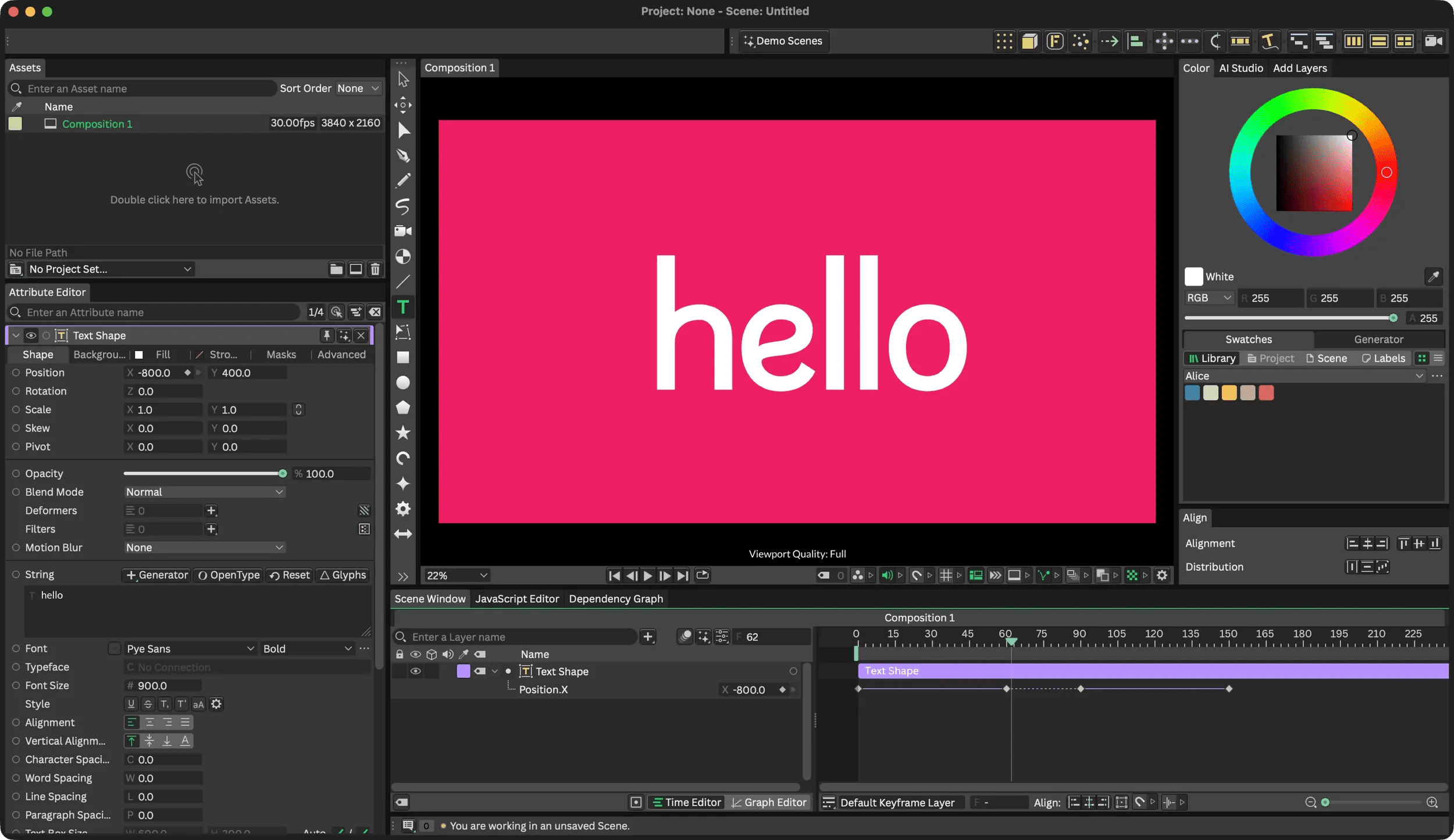
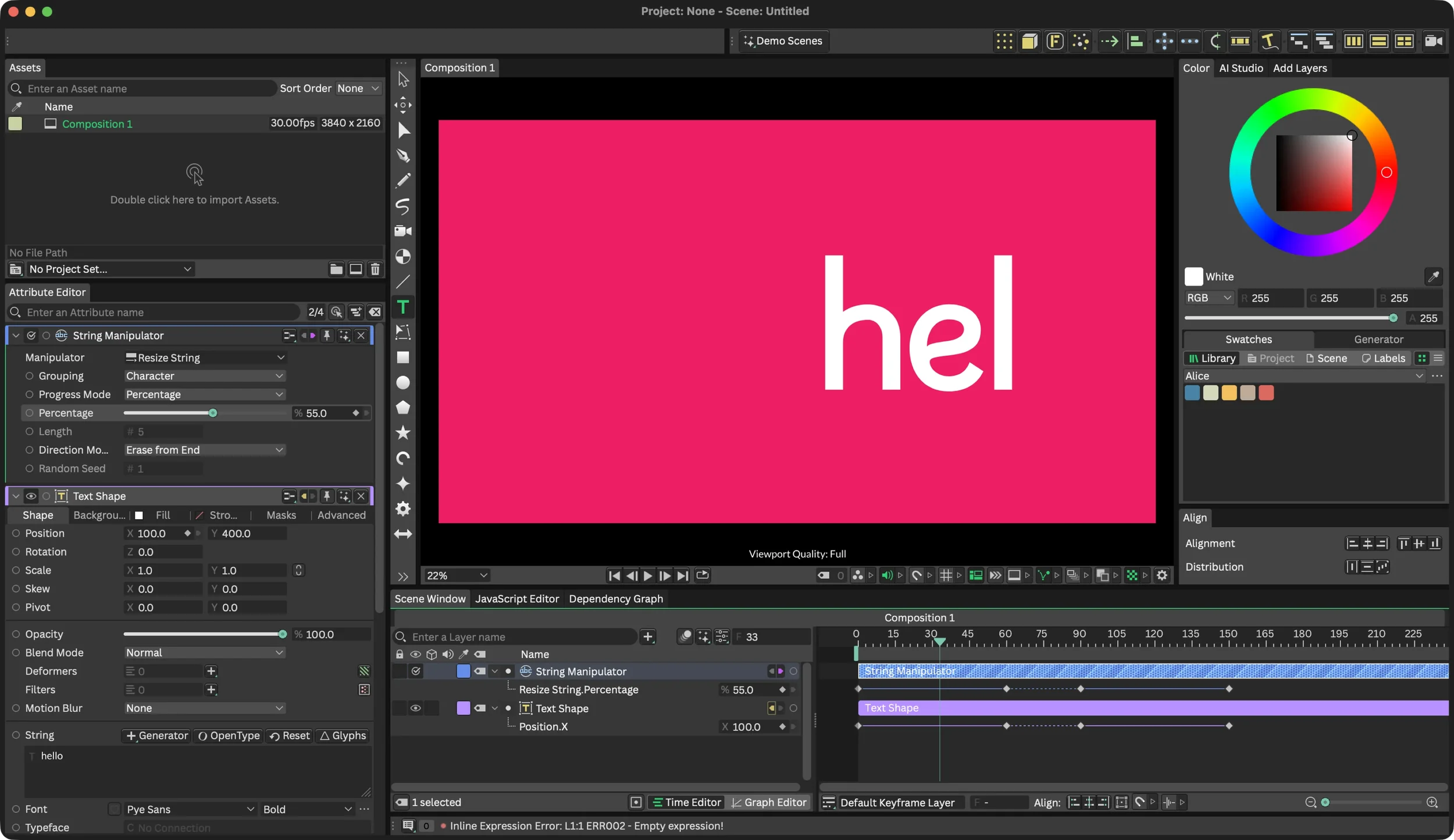
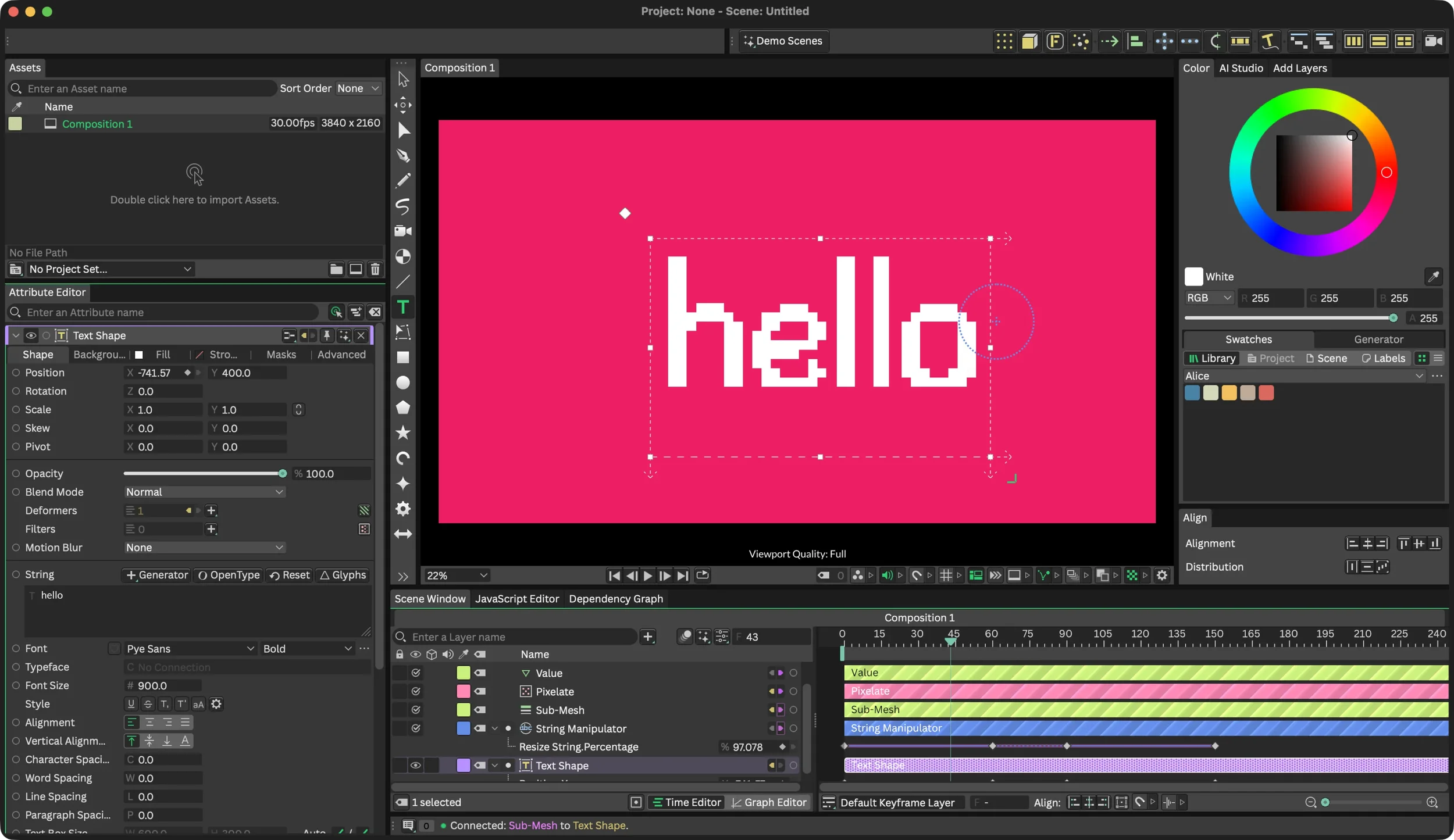
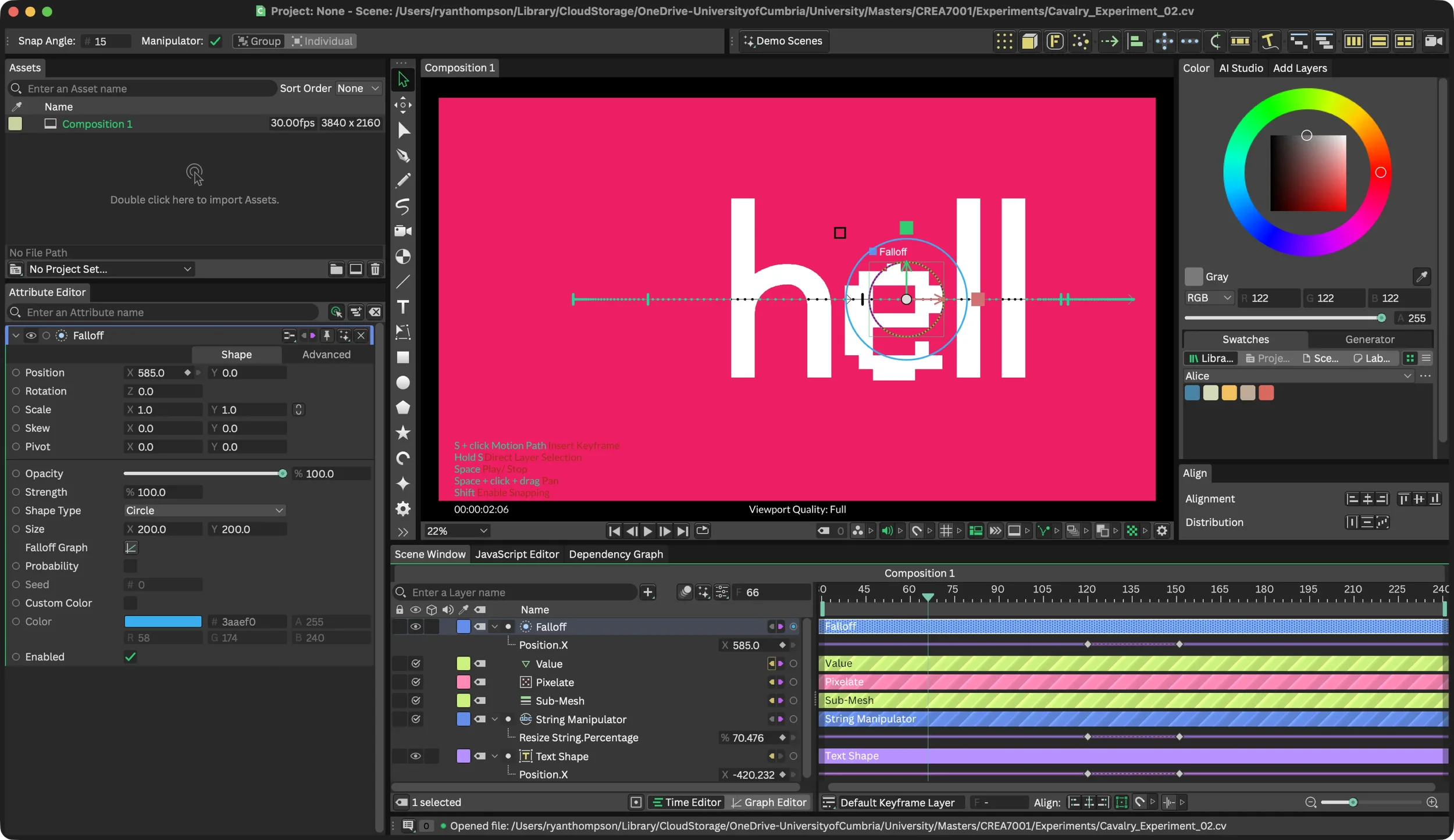
Easier to understand, but really hard to time right. I still feel something is missing connection wise. Discovering that maybe reverse-engineering the graphics maybe isn’t the best way to approach this. It was also hard to show what’s happening in screenshots (these are more to show the scene window and timeline of actions instead).
Experiment Outcome
The next experiment needs to be of my own creation vs trying to learn from existing designs. Finding it hard to understand the process properly without starting from scratch.
16/10/2026
Experiment 3: Poppin’ Text
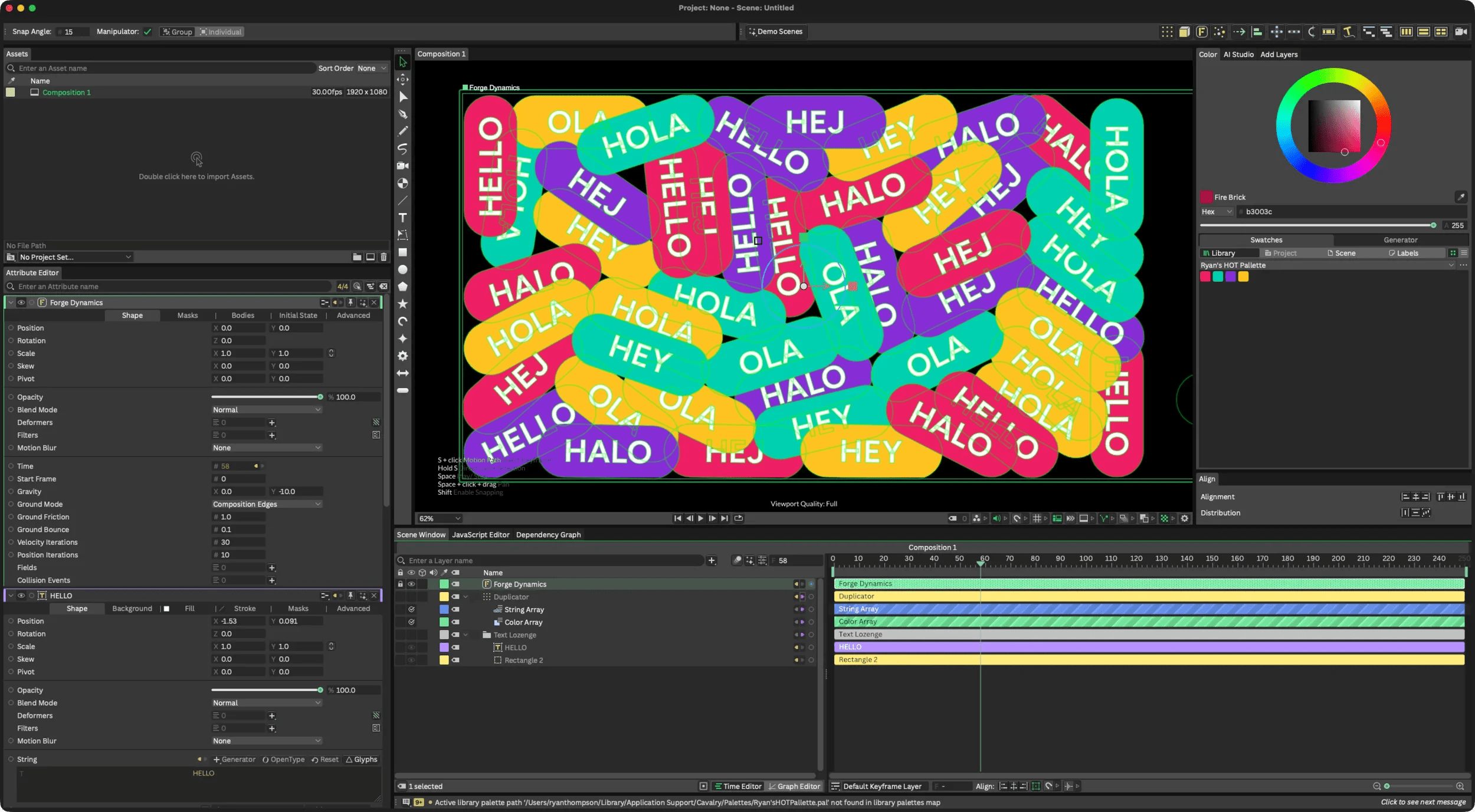
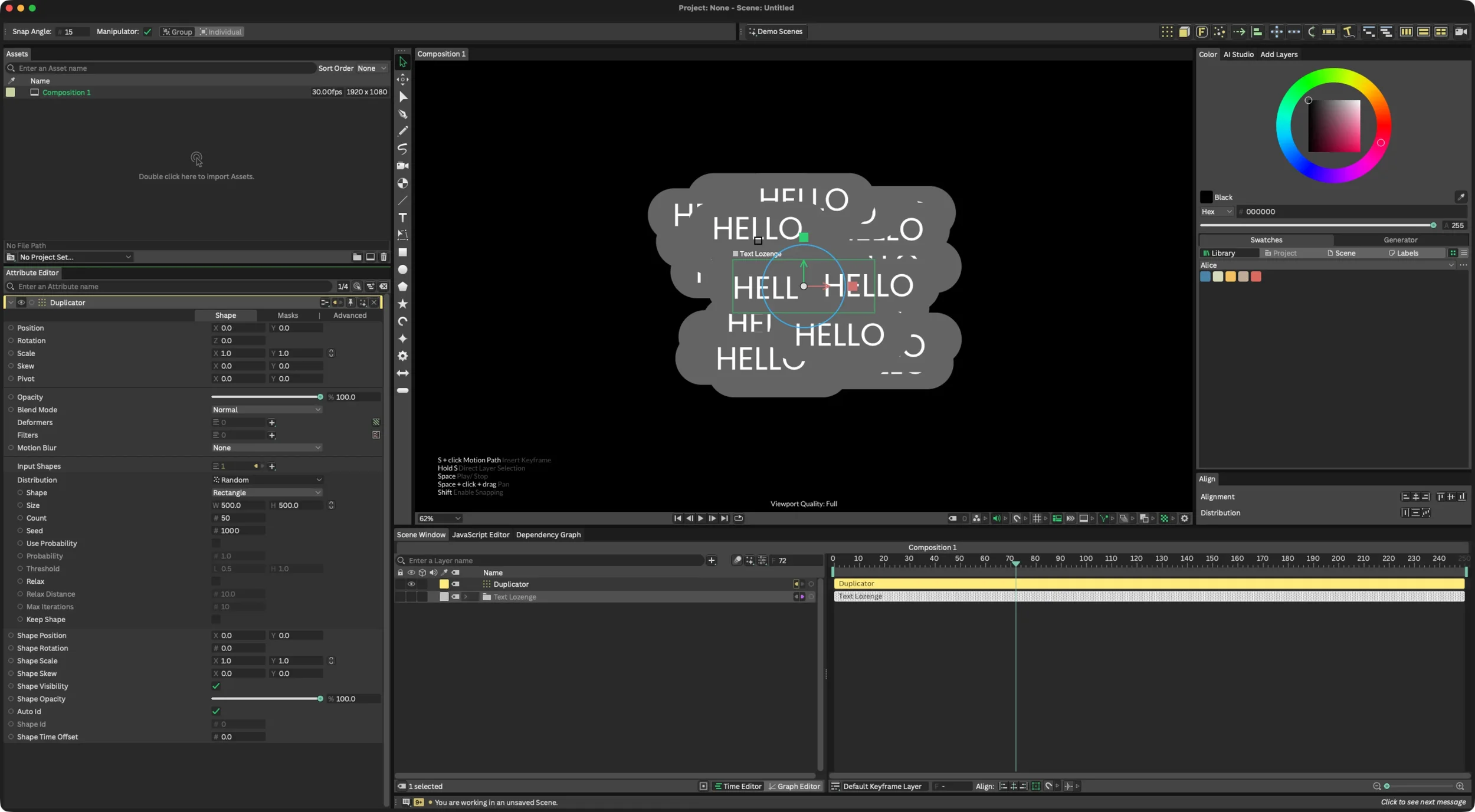
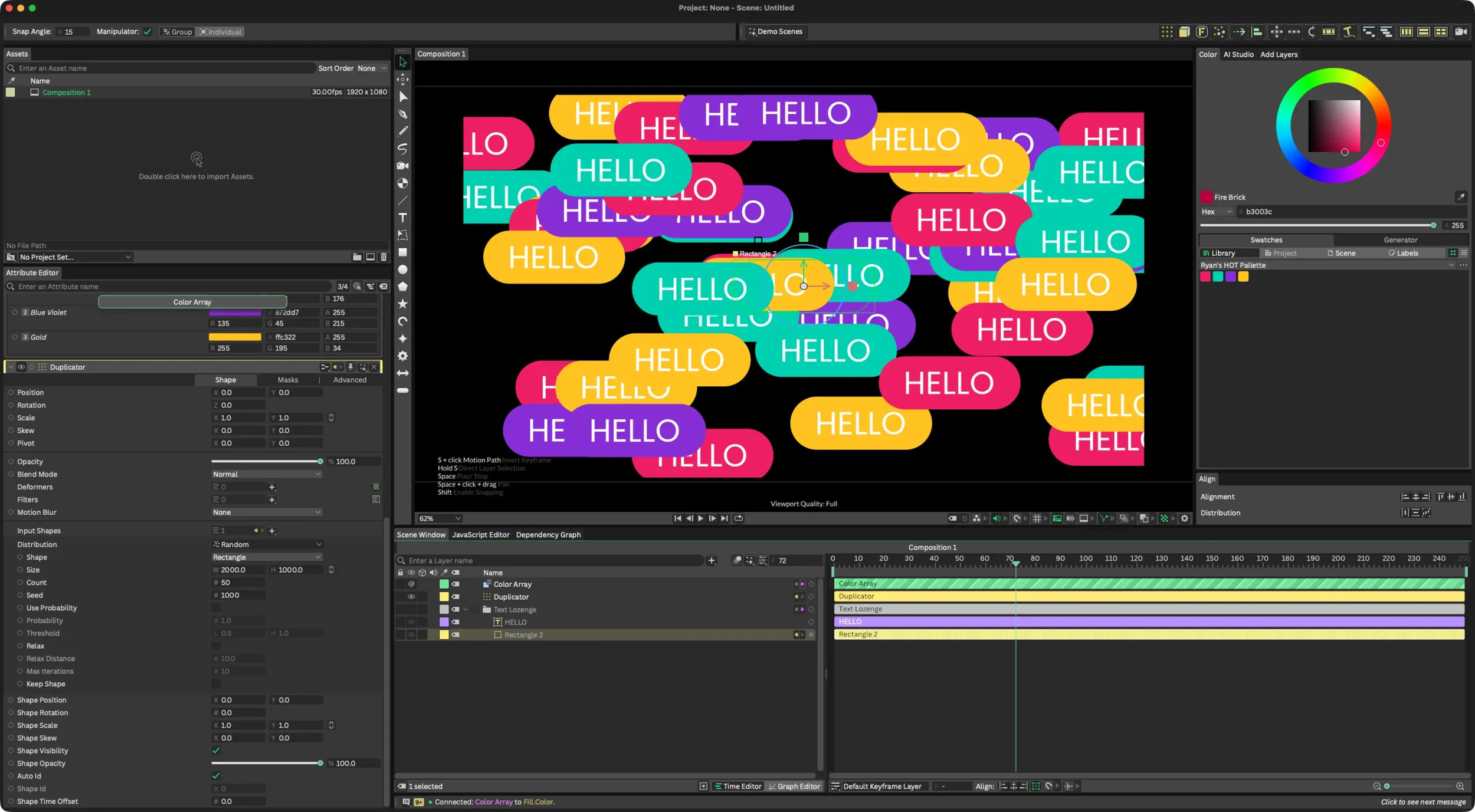
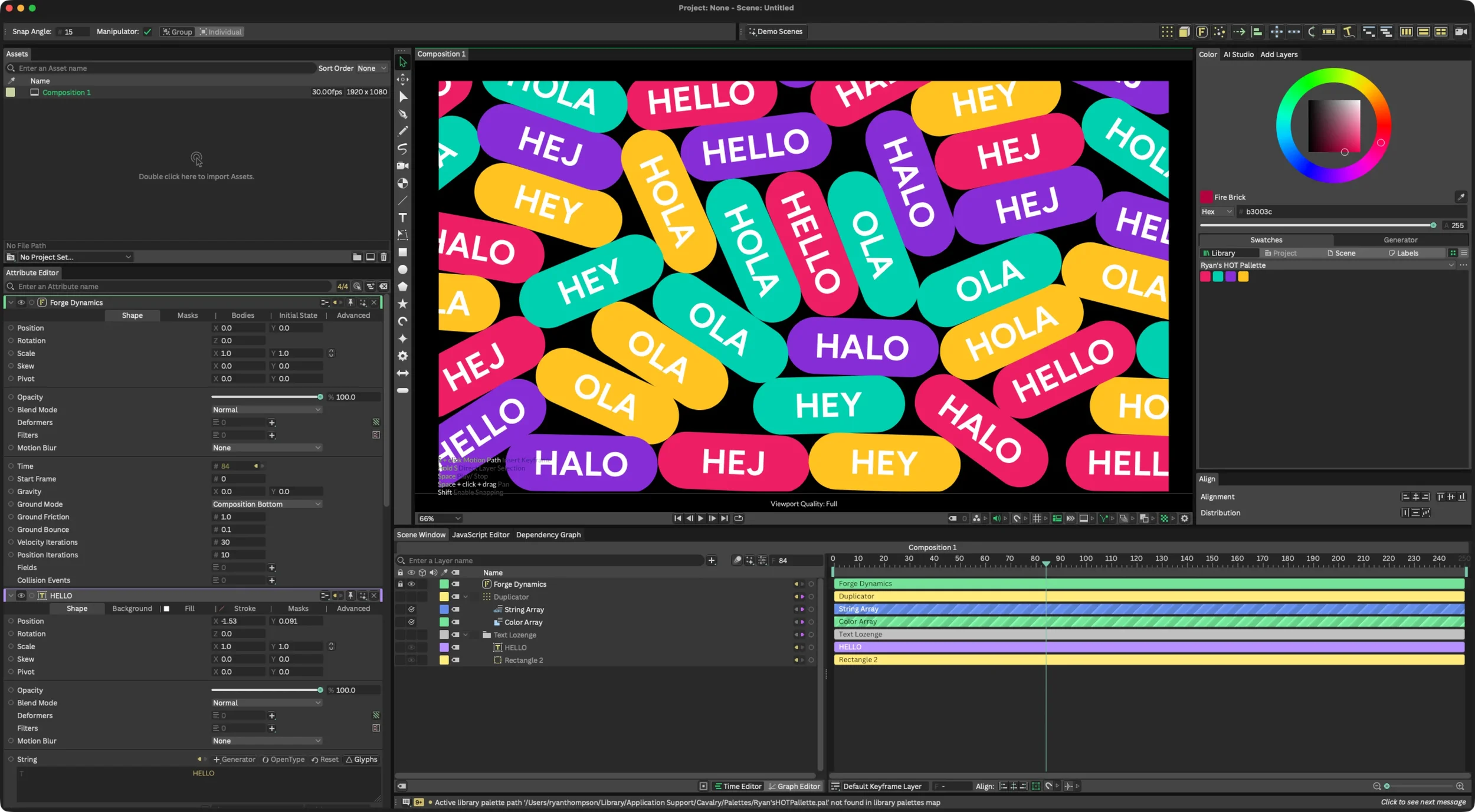
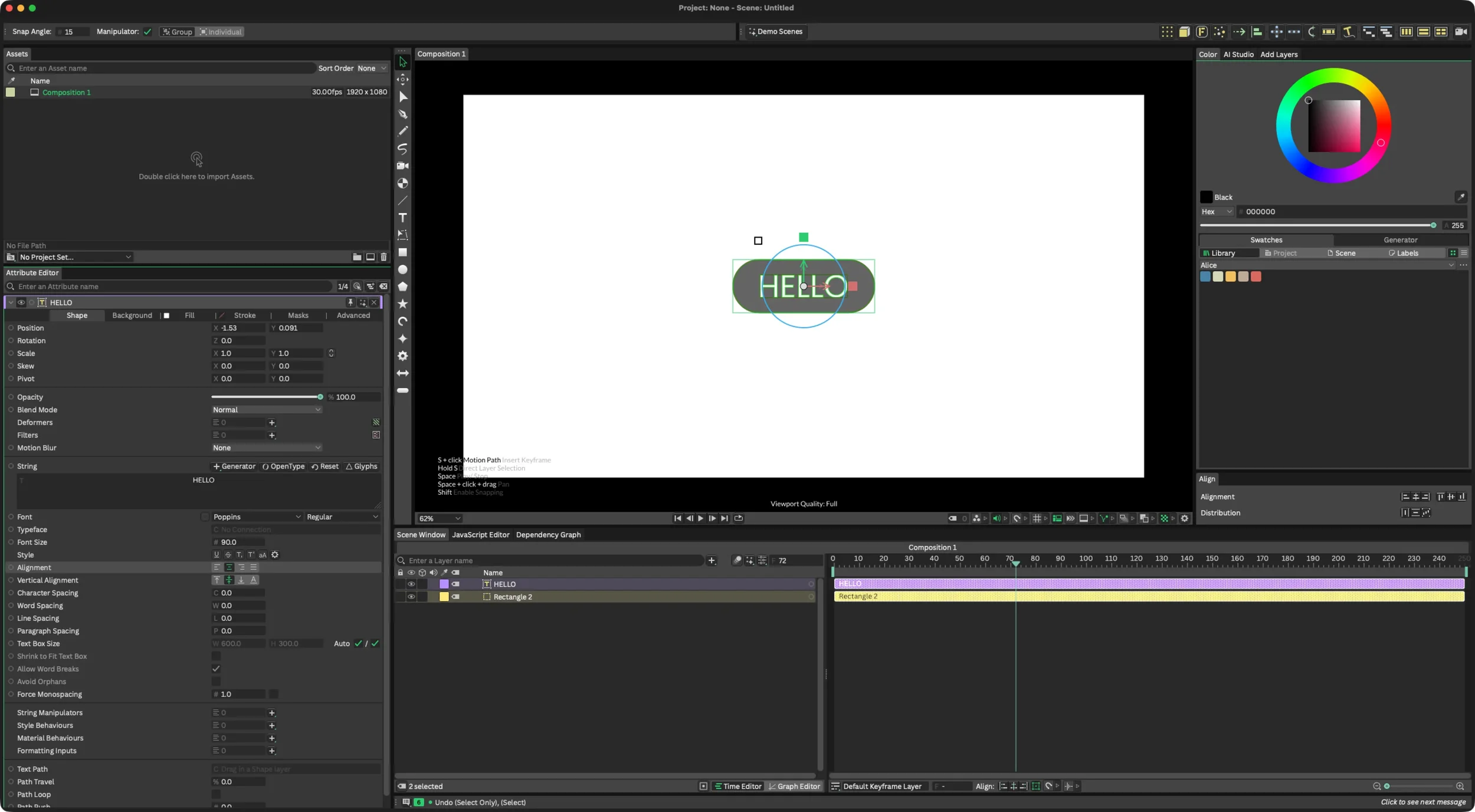
for the 3rd experiment, I felt it was important to stop trying to chase the more complex motion, and just begin with some really simple tutorials, mainly to allow me to get to grips with Cavalry. I found a great tutorial on YouTube that involves kinetic type.
Tutorial used for this experiment:
Experiment Process
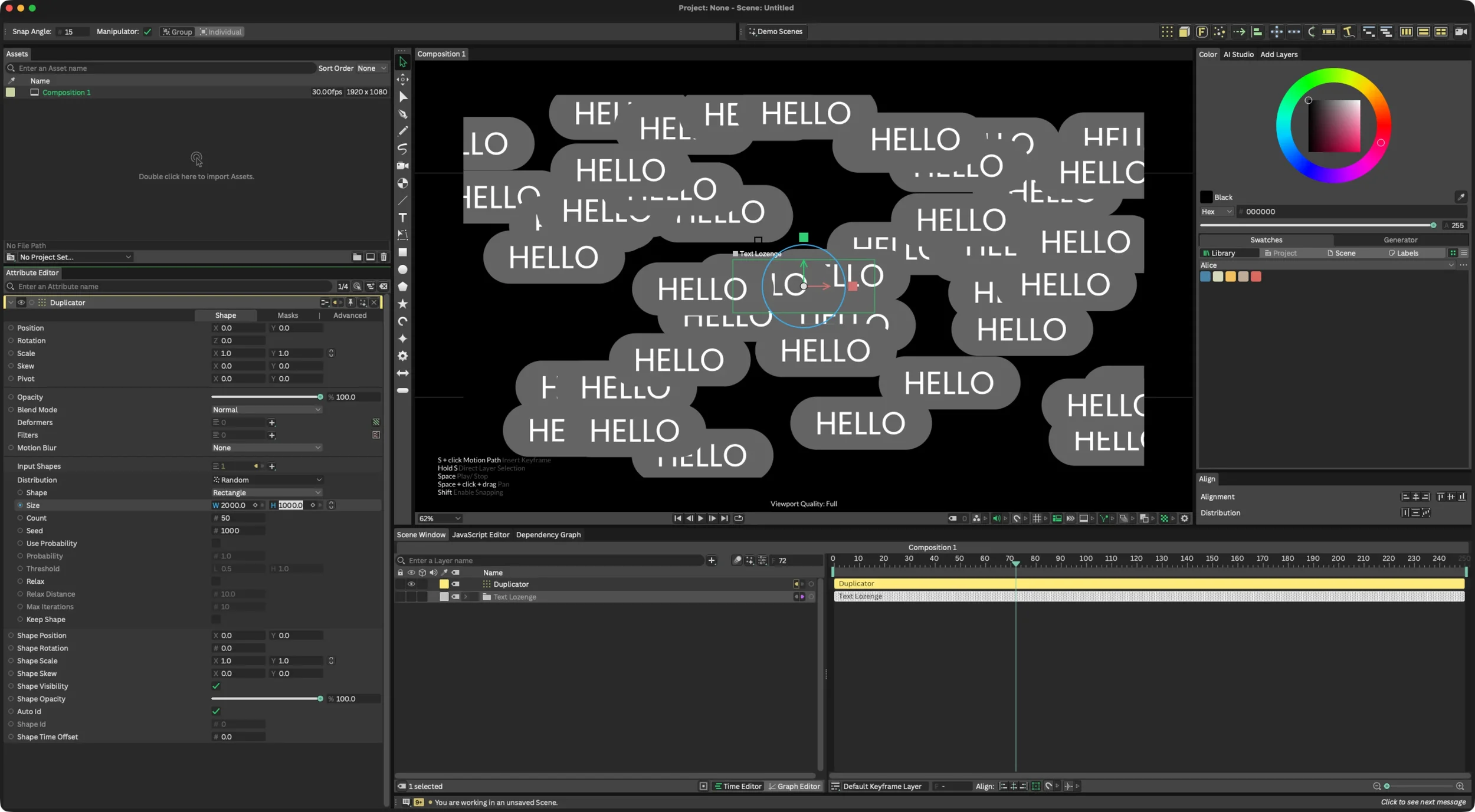
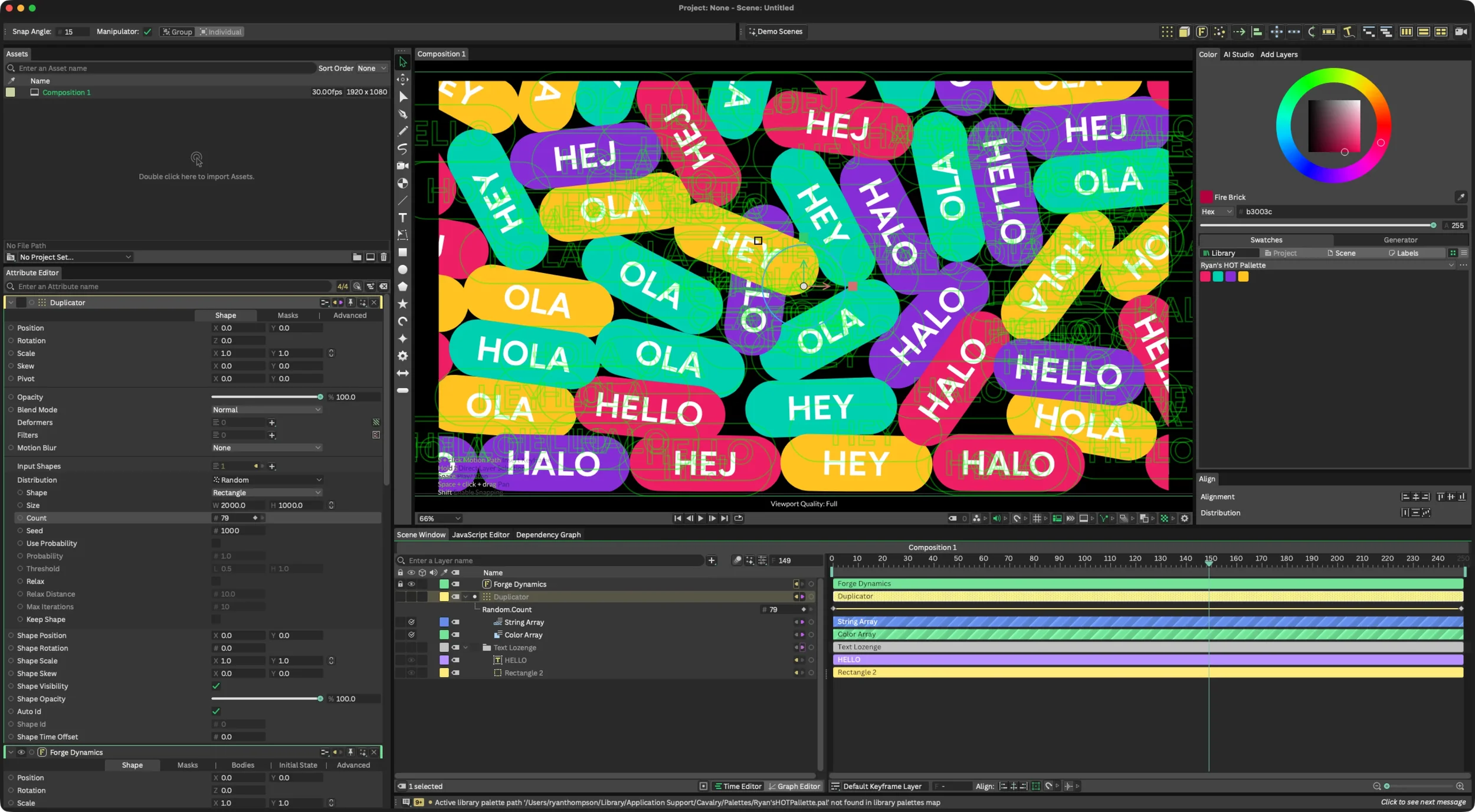
I think looking back I probably should have started by learning some basic animations first rather than trying to dissect more complicated ones. This worked out so much better.
I wanted to try applying this animation style to a different object (a vector shape). Whilst I want to learn animation with text, I think it’s important to be able to apply it across all different assets.
Recreating this without the text pill was easy enough; I was able to make this without following the tutorial. Whilst i’m not sure it works as well as the text pill, it has given me an insight into which settings affect what, and what different systems and dynamics link together to create effects. There was also a small bit of key framing involved with this type of animation, mainly controlling the speed of the ‘pop’, giving a small insight into how timing affects pace throughout the graphic.
Additionally, Vince saw my animation and asked if I could recreate his “blob” branding in place of the ducks. This one appears to be paced slightly better towards the beginning (maybe a sign of getting to grips with understanding how it works)>
Experiment Outcome
Additional Experiments